
The Short Answer
How much does a garage conversion cost in Los Angeles?
Why Convert Your Garage in Los Angeles
Your garage already has a slab, walls and a roof, and it usually has driveway access and a utility connection nearby. That existing structure is why a conversion often costs less than building a detached unit from the ground up.
Homeowners usually convert a garage for one of four reasons:
- Rental income from a separate unit on the property
- Space for family, such as a parent or an adult child, close by but with some independence
- More usable space for a home office or guest suite
- Added property value from legal, permitted living space
The word "legal" matters. An unpermitted conversion can cause trouble when you sell, refinance or file an insurance claim, and the city can require you to correct it. If your garage was already converted without permits, we can review what it would take to bring it into compliance.
ADU vs JADU: Which Garage Conversion Is Right for You?
Most Los Angeles garage conversions are permitted as either an Accessory Dwelling Unit (ADU) or a Junior ADU (JADU). The right choice depends on your garage and how you plan to use the space.
Garage-to-ADU conversion
- Works with attached or detached garages
- Functions as a complete, independent home with its own kitchen and bathroom
- Is usually the better choice for long-term rental income
- Costs more because it needs a full kitchen, a bathroom and more utility work
Garage-to-JADU conversion
- Limited to 500 square feet within the existing home, which can include an attached garage
- A detached garage does not qualify, because it is not part of the house
- Needs an efficiency kitchen, and can share a bathroom with the main home
- Generally requires the owner to live on the property
- Often costs less because it can share existing systems
Simple rule: if the garage is detached, or you want a fully independent rental, an ADU is usually the answer. If the garage is attached and you want a smaller, lower-cost space, a JADU may fit. Our guide to ADU construction in Los Angeles covers detached and attached ADUs if a conversion is not the right fit.
Garage Conversion Cost in Los Angeles
A complete garage-to-ADU conversion typically runs $90,000 to $180,000 all-in. Use these ranges for early planning:
- One-car garage or small studio: usually toward the lower end of the range
- Two-car garage with a one-bedroom layout: usually mid-range to upper-range
- Older garage needing structural or foundation work: can reach or exceed the top of the range
- JADU in an attached garage: often below the ADU range, because it can share a bathroom and existing systems
What moves the price most:
- Plumbing distance. The farther the new kitchen and bathroom are from the sewer connection, the higher the cost. Trenching and concrete cutting add up quickly.
- Electrical capacity. Many older Los Angeles homes need a panel upgrade to carry a new unit.
- Slab and foundation condition. Cracks, moisture or a sloped slab may need repair or a new floor system.
- Roof and ceiling height. Low ceilings or an aging roof can add framing work.
- Finish level. Cabinets, flooring, fixtures and appliances can change the budget by tens of thousands of dollars.
Use our ADU cost calculator for a quick estimate, or read the detailed garage conversion ADU cost guide. We give you a fixed-price contract once the scope is set. Flexible financing through Synchrony is available, subject to credit approval, and our ADU financing guide covers other ways to pay for the work.
Garage Conversion Permits in Los Angeles
In the City of Los Angeles, garage conversions are reviewed and permitted by LADBS, the Department of Building and Safety. Unincorporated areas go through LA County Public Works, and cities such as Burbank, Glendale, Pasadena and Santa Monica have their own departments.
California's ADU laws make these projects easier than they used to be:
- Replacement parking: state law generally does not require you to replace parking lost to a garage conversion.
- Setbacks: an ADU created inside an existing structure generally does not need new setbacks.
- Review time: the local agency generally must act on a complete ADU application within 60 days.
- Impact fees: ADUs under 750 square feet are generally exempt from impact fees. Plan-check, permit and some other fees still apply.
A typical submittal includes a site plan, floor plans, elevations, structural details, energy compliance forms and utility information. Local rules can add more steps, especially in hillside, coastal, historic or fire-hazard areas. Permit rules also change, so we confirm the current requirements for your address before you commit to a design.
What It Takes to Make a Garage Livable
A garage is not built for people to live in, so a legal conversion has to bring it up to current residential code. Expect work in these areas:
- Floor: adding a moisture barrier and insulation, and leveling a sloped slab
- Walls and ceiling: adding insulation, drywall and framing where needed
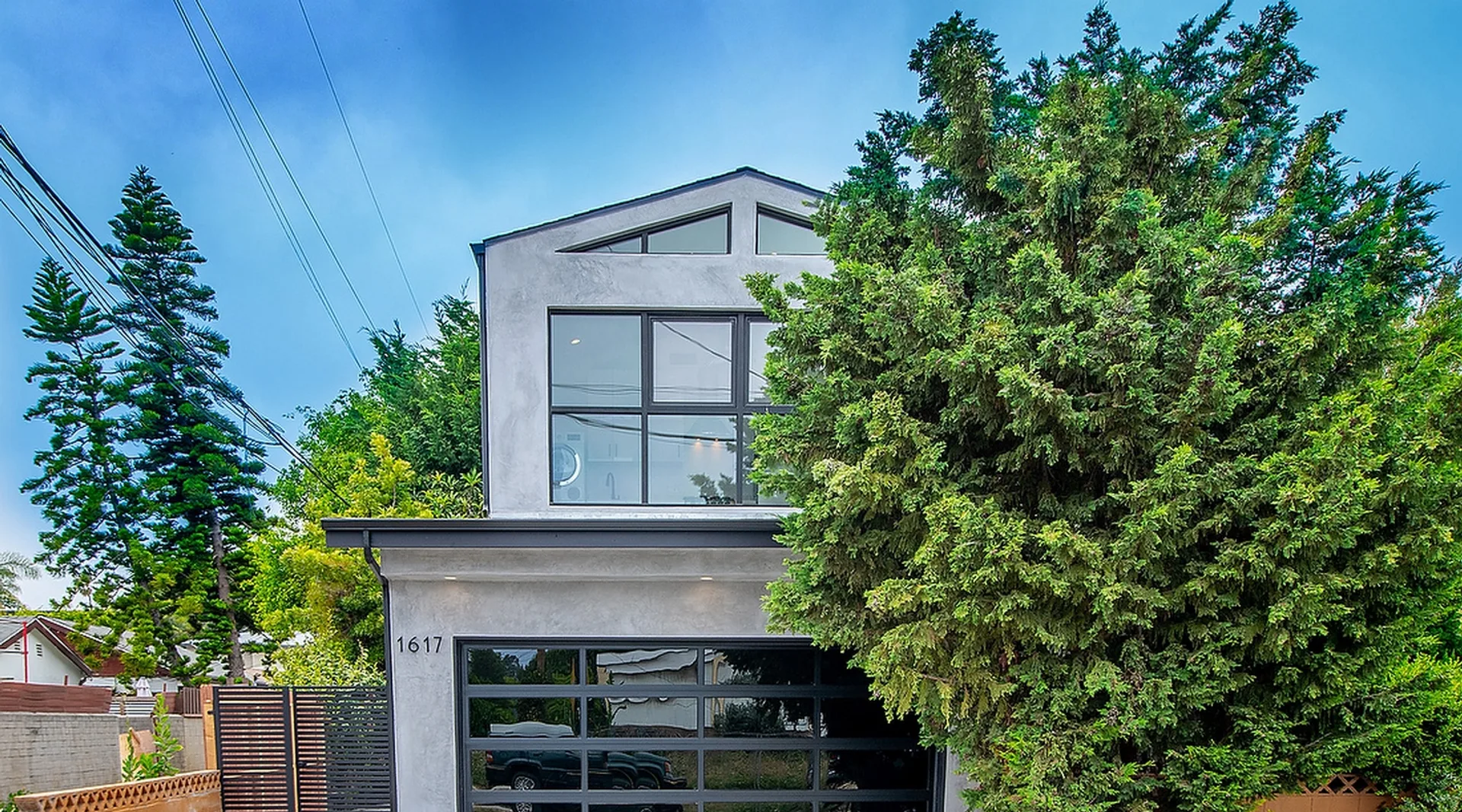
- Garage door opening: replacing the door with a framed wall, windows and new exterior finish that matches the house
- Windows and egress: providing natural light, ventilation and emergency escape openings
- Plumbing: adding kitchen and bathroom lines, often with new trenching to the sewer connection
- Electrical: adding circuits and outlets, smoke and carbon monoxide alarms, and any needed panel upgrade
- Heating and cooling: a ductless mini-split is a common choice
- Energy compliance: meeting California's Title 24 energy requirements
Done well, the result feels like a small home, not a converted garage. Good layouts usually put the kitchen and bathroom along one wet wall, which saves money, and use taller windows to bring in light.
Our Garage Conversion Process and Timeline
Most garage conversions take several months from first meeting to final inspection. Here is how the project usually runs:
- Site visit, about 1 week. We inspect the garage, utilities and access, and discuss your goals.
- Design and engineering, 3 to 6 weeks. We prepare the layout, plans and any structural details.
- Permits, 1 to 3 months. We submit the plans, respond to corrections and get your permit issued.
- Construction, 8 to 14 weeks. We complete the framing, utilities, insulation, drywall, finishes and fixtures.
- Final inspection. We complete the sign-offs and hand over the finished unit.
Every project includes a written fixed-price contract, full permit handling and a dedicated project manager. We are licensed under CSLB #861628. We work across the city, including Sherman Oaks, Burbank, Eagle Rock and Venice, where a garage conversion on a small lot can be especially valuable.
Frequently Asked Questions
Do I need a permit to convert my garage in Los Angeles?
Yes. Converting a garage into living space requires permits. In the City of Los Angeles they come from LADBS, while LA County and other cities have their own building departments. Permitted work also protects you when you sell or file an insurance claim.
Do I have to replace my parking if I convert my garage?
Generally, no. State law generally does not require replacement parking when a garage is converted into an ADU. We confirm the rule for your property, particularly if your project has other conditions.
What is the difference between an ADU and a JADU?
An ADU is a complete independent unit and can be in an attached or detached garage. A JADU is limited to 500 square feet within the existing home, can use an attached garage, and can share a bathroom with the main house. JADUs generally require the owner to live on the property.
How long does a garage conversion take?
Most projects take several months in total: about 3 to 6 weeks for design, 1 to 3 months for permits, and 8 to 14 weeks for construction. Older garages and long utility runs can add time.
Can I rent out my converted garage?
An ADU can generally be rented. A JADU can usually be rented too, but it generally requires the owner to live on the property. Short-term rental rules are stricter, so check the local rules before you plan around one.
Is a garage conversion cheaper than a detached ADU?
Usually, yes, because the slab, walls and roof already exist. The savings can shrink if the garage needs major structural work, a new foundation or a long sewer run. We compare both options during the site visit.
Flexible Financing Available
Pay for your project over time with the Synchrony Project Card. Apply online and get a credit decision as soon as you submit.
Subject to credit approval. Financing is offered through Synchrony, not ESV Prime Construction.

Why Los Angeles Homeowners Trust ESV Prime
The credentials, coverage, and track record behind every project we build.
Licensed General Contractor
California CSLB #861628 — Class B General Building. Verify it yourself before you sign anything.
Verify our license →Bonded & Fully Insured
Contractor bond, general liability, and workers’ compensation coverage protect your home and everyone on site.
We Pull Every Permit
LADBS and local plan-check, Title 24, and inspections handled in our name — your project is documented and appraiser-ready.
20+ Years, 500+ Projects
Building across Los Angeles County since 2005, with 500+ completed remodels, additions, ADUs and custom homes.
Fixed-Price Contracts
A clear written scope and price up front — no open-ended billing and no surprise change orders.
5.0-Star Rated
Rated 5.0 on Google from 25 homeowner reviews, backed by a written workmanship warranty on every job.